
Warehouse Lighting Cost: What an LED High Bay Installation Actually Costs in 2026
Indicative UK costs for lighting a warehouse with LED high bays — per fitting, per square metre and per year to run — with a worked example for a 5,000 m² unit and the items that move the price most.
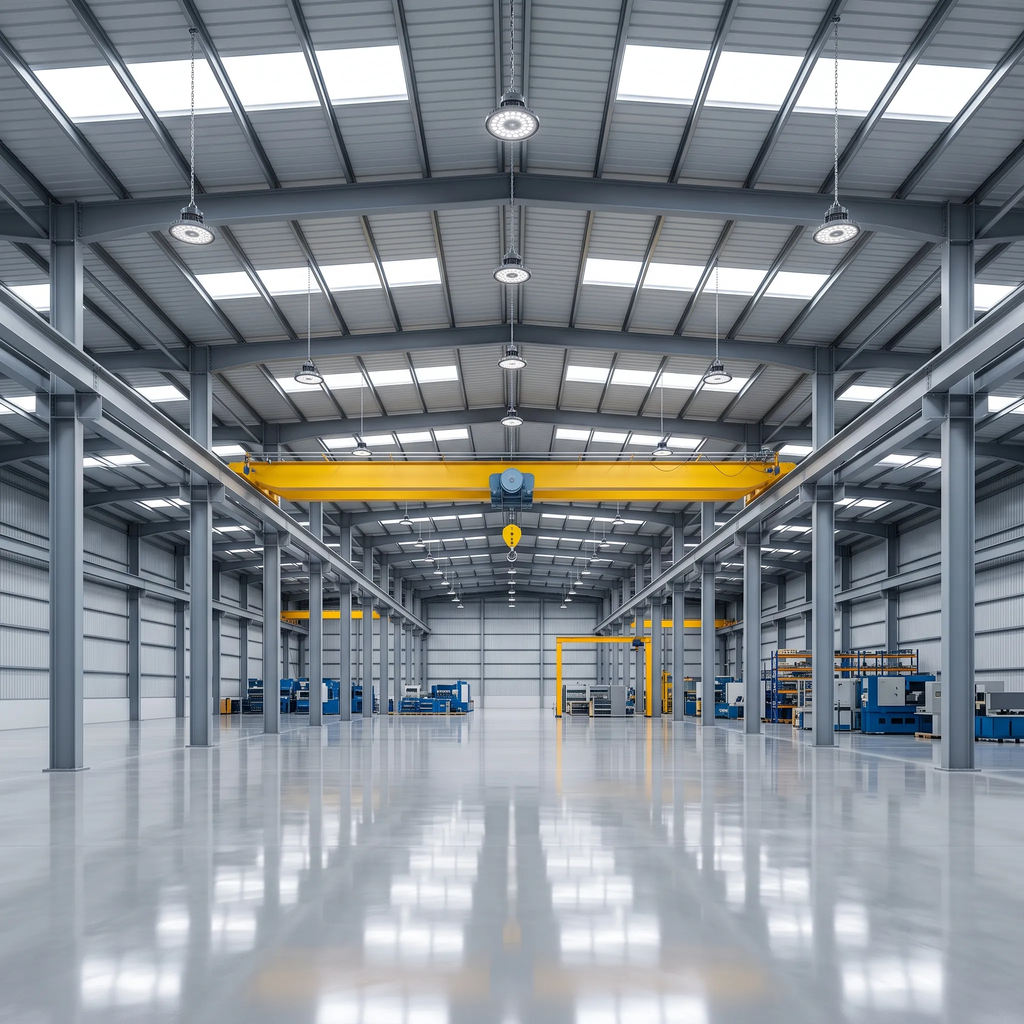
Anyone budgeting a warehouse lighting project wants three numbers: what the fittings cost, what the installed scheme costs per square metre, and what it costs to run. Prices vary with specification, quantity and site, so treat everything below as indicative 2026 ranges for planning rather than a quotation — but they are realistic ranges, and the worked example shows how they combine.
How many fittings a warehouse needs
Cost starts with a count. For general storage to 150–200 lux at 8–12 m, a 150 W class LED high bay delivering 20,000–25,000 lumens covers roughly 45–60 m² of open floor; in racked aisles the count is set by the aisle layout instead, as our high bay design guide explains. A 5,000 m² open warehouse therefore needs around 90–110 high bays; a heavily racked one of the same size may need more, smaller, aisle-optic fittings. Getting this count from a photometric calculation rather than a rule of thumb is the single biggest saving on the whole project, because every unnecessary fitting is bought, installed, powered and maintained for fifteen years.
Cost of the fittings
Trade prices for a 150 W class LED high bay from an established manufacturer, with a five-year warranty, LM-80 data behind the lifetime claim and a rated ambient of at least 40 °C, typically sit between £90 and £200 per fitting at project quantities, with 200 W class fittings for higher roofs at £150 to £300. Integral microwave sensors add £20 to £50 per fitting; DALI drivers a little more; integral emergency packs £40 to £80 where an aisle forms part of an escape route. Fittings at the very bottom of the market can be found at half these figures, and our article on LED lifetime claims explains what usually gives to get there — driver quality, thermal design and the honesty of the datasheet.
Cost of installation
Installation is where warehouse projects differ most from offices. Labour to fit, wire and commission a high bay runs from around £50 to £120 per fitting depending on height, whether existing circuits and mounting points can be reused, and whether the work is done in a live warehouse or an empty one. Access equipment is a separate line: scissor-lift or boom hire of £150 to £350 per day, plus the operator's time, for as many days as the height and the layout demand. Add disposal of the old fittings under the WEEE regulations, any circuit alterations, a lighting design and a test certificate, and a realistic all-in installation figure is £120 to £250 per fitting for a straightforward like-for-like replacement, more where the roof is high or the racking is in the way.
A worked example: 5,000 m² at 10 m
- Design: 100 × 150 W high bays with integral sensors, aisle optics where racked, 200 lux maintained.
- Fittings: 100 × £160 = £16,000, including sensors.
- Installation, access, disposal, design and certification: 100 × £180 = £18,000.
- Installed total: around £34,000, or roughly £7 per square metre. Range across realistic specifications and sites: £5 to £10 per square metre.
- Running cost: 100 × 150 W × 4,500 hours = 67,500 kWh a year, about £16,900 at £0.25 per kWh before controls; with sensors and daylight dimming in a typical two-shift warehouse, 30 to 50 percent less.
- Against the 400 W metal halide fittings it usually replaces (about 460 W each including gear): 207,000 kWh and roughly £51,750 a year. The saving before controls is around £34,900 a year, so the installation pays for itself in about a year, and in well under a year once maintenance is counted.
What moves the price
Roof height is the biggest factor, because it raises both the lumen package needed and the cost of reaching the ceiling. Racking density is next: aisle optics and more, smaller fittings cost more than an open grid but light the rack faces properly. Live-site working — nights, weekends, aisle by aisle — adds labour. Controls add cost and repay it fastest in intermittently used space. Finally, ambient temperature and dust: a fitting rated for 25 °C in an IP20 housing is cheaper than an IP65 fitting rated for 50 °C, and in a summer warehouse or a dusty one it will not last as long, a point covered in our guide to how heat affects LED lifespan.
The cheapest warehouse lighting scheme is the one with the right number of the right fittings. Everything else is detail.
For a budget figure, £5 to £10 per square metre installed is a defensible planning range for an LED high bay scheme in a UK warehouse in 2026, with annual running costs of roughly £2.50 to £4 per square metre before controls. For a real figure, Regents LED will produce a photometric design and a costed fitting schedule for a specific building — send the floor plan, roof height and racking layout through the enquiry form and our industrial and logistics team will come back with the numbers.