
Sports Hall and Pitch Lighting: EN 12193 Classes, Lux Levels and Flood Light Selection
The lux levels, uniformity and glare limits BS EN 12193 sets for sports halls, football pitches, tennis and multi-use games areas, class by class — and how to choose LED floods and hall fittings that meet them.
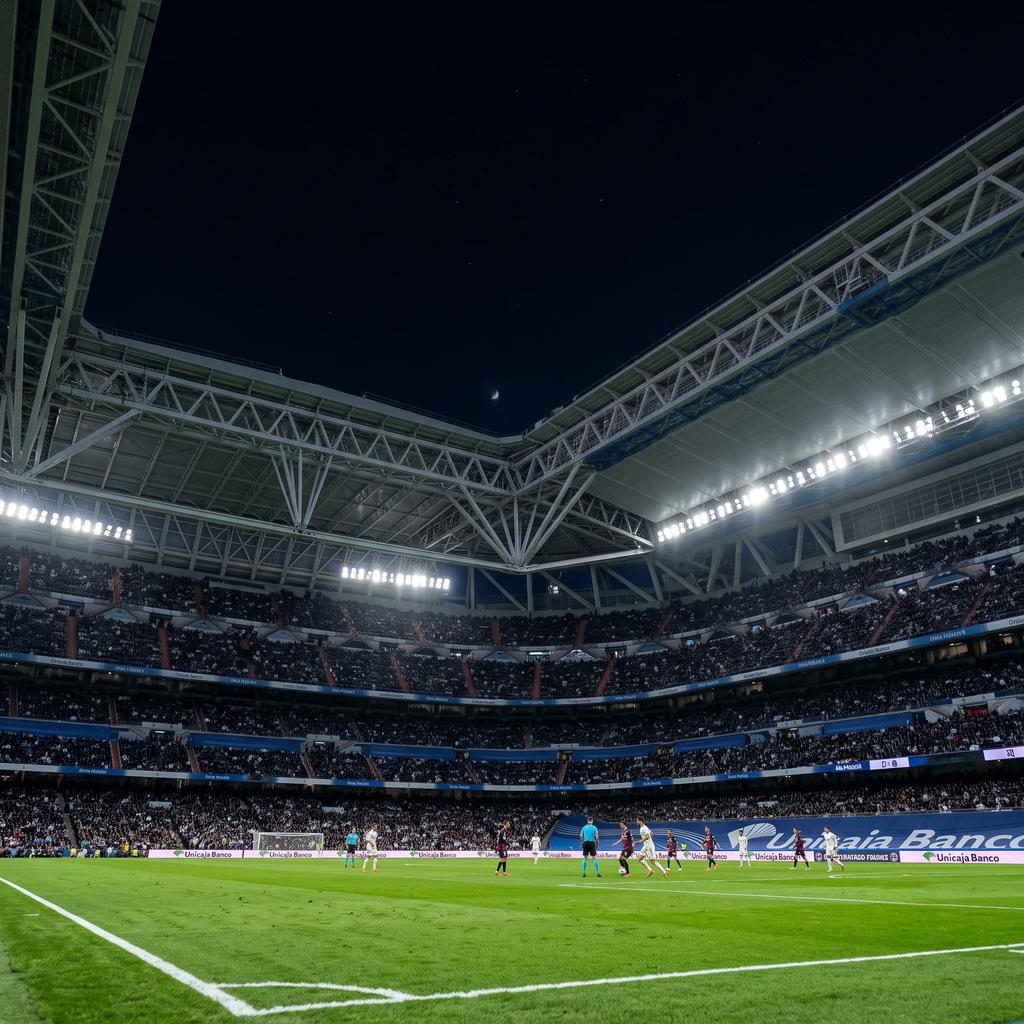
Sports lighting has its own standard, and for good reason: a badminton shuttle at ceiling height, a goalkeeper facing a floodlight and a camera following a fast ball all make demands that office lighting never has to. BS EN 12193, Light and lighting — Sports lighting, is the reference in the UK and across Europe. It sets, for each sport and each level of play, the horizontal illuminance, the uniformity, the glare rating and the colour rendering a facility needs. National governing bodies and Sport England guidance build on it. This article sets out the classes, gives the figures for the most common facilities and turns them into a fitting specification.
The three lighting classes
EN 12193 grades every facility into three classes by the level of competition. Class I is top-level national and international competition, with large spectator numbers and long viewing distances. Class II is mid-level competition — regional and local club matches — and high-level training. Class III is low-level competition, school and recreational use, and general training. The same sports hall might be Class III for PE and Class II for a county tournament; the class is chosen per facility, and the higher the class, the higher the illuminance and the tighter the uniformity.
Illuminance and uniformity by facility
- Indoor sports hall, for the ball sports typically played in one: Class III 200 lux (uniformity 0.5), Class II 500 lux (0.7), Class I 750 lux (0.7). Sport England guidance for community halls generally asks for at least 300 lux, so most new school and leisure halls are designed to that or above.
- Badminton: Class III 300 lux, Class II 500 lux, Class I 750 lux, with particular attention to glare from fittings above the court.
- Football, outdoor: Class III 75 lux (0.5), Class II 200 lux (0.6), Class I 500 lux (0.7). The Football Association's floodlighting requirements for the National League System steps sit within this range and specify their own minimum averages and uniformities by step.
- Tennis, outdoor: Class III 200 lux, Class II 300 lux, Class I 500 lux; indoor courts a step higher.
- Multi-use games areas (MUGAs) and five-a-side: typically designed as Class III or II football, 75 to 200 lux, with the higher figure now the norm for commercial small-sided centres.
- Athletics tracks, hockey and rugby: hockey needs more light than football at every class because of the small ball — 200 lux with 0.7 uniformity even at Class III, 300 lux at Class II — and England Hockey's own guidance asks for more again for club and league play, while rugby matches football's figures.
Two figures sit alongside the lux values. Glare rating (GR), the outdoor glare metric in EN 12193, must not exceed 50 for Class I and II, with 55 allowed at Class III for many sports; it is driven by the aiming angles and the luminaire's intensity distribution. Colour rendering should be Ra 60 or better for Classes II and III and 70 to 80 for Class I, with televised events needing higher still and flicker-free drivers so that slow-motion replay is clean.
Lighting a sports hall
Indoor halls are lit from the roof, usually by high-output linear luminaires or high bays mounted between the trusses and above the height of play. Three things matter beyond lux. Ball impact: fittings above a court will be hit, and must carry ball-proof certification to BS EN 13964 or DIN 18032-3 as well as an IK rating, with wire guards where the roof is low. Glare against the ceiling: badminton and volleyball players look up, so fittings should be positioned outside court lines where possible, with diffusers or louvres rather than bare lenses. Switching by court: a hall divided into three badminton courts should be able to light one court at a time, which is a wiring and controls decision made before the fittings go up.
Lighting a pitch: choosing and aiming floods
Outdoor pitches are lit by LED flood lights on columns, usually four, six or eight masts at 12 to 18 m. LED has transformed this application: asymmetric optics put light on the pitch rather than into the sky, the beam can be shaped for the column position, and output can be switched or dimmed per match, per training session or per court. Selection is a photometric exercise — the fitting's lumen package, beam type and aiming angles are chosen together to hit the class's average, uniformity and GR at the same time. Two practical rules: keep aiming angles below about 70 degrees from vertical to control glare and spill, and use full cut-off optics rather than tilting a symmetric flood skyward to reach the far touchline.
Obtrusive light: the planning condition
Pitch floodlights are the outdoor lighting most likely to draw complaints and the most likely to carry planning conditions. The Institution of Lighting Professionals' guidance on obtrusive light sets the limits on light into windows, upward light and luminaire intensity for the site's environmental zone, and most consents specify a curfew — often 21:30 or 22:00 for community pitches. Full cut-off LED floods, correct aiming and a timed control system are what make those conditions achievable; our article on outdoor lighting and light spill covers the detail.
Sports lighting is a class, a lux figure, a uniformity and a glare rating, all met at once. A fitting that delivers the lumens but not the aiming delivers a bright pitch nobody can see across.
Whether it is a school hall to Class III, a club pitch to Class II or a commercial five-a-side centre, the route is the same: agree the class, calculate the layout with the real fittings' photometric files, and specify impact protection, controls and spill limits alongside the lux. Regents LED supplies floods, high bays and linear fittings for the sports and recreation sector, and produces the EN 12193 calculation — average, uniformity, GR and spill — for a specific hall or pitch as part of any enquiry.