
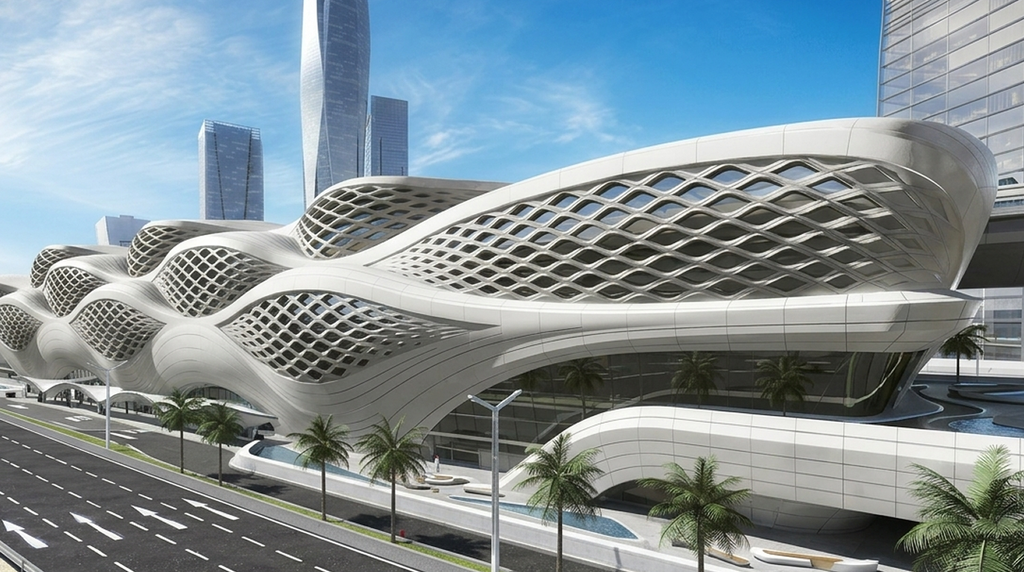
Riyadh Metro
Transport · Saudi Arabia
COMPLETED 2023
A metro station is a room people pass through at speed, often for the first time, and usually while reading something. The lighting has to do two jobs at once — hold the architecture together and keep every sign, edge and step legible — without a single visible glare source, because the floors are polished stone and the ceilings are perforated metal. The scheme here works almost entirely from behind: light concealed in the perforation, in the soffit and in the handrail, with direct downlight used only where a task genuinely needs it. Regents LED supplied the concourse and platform levels.
Concourse
Everything Hidden, Nothing Dark
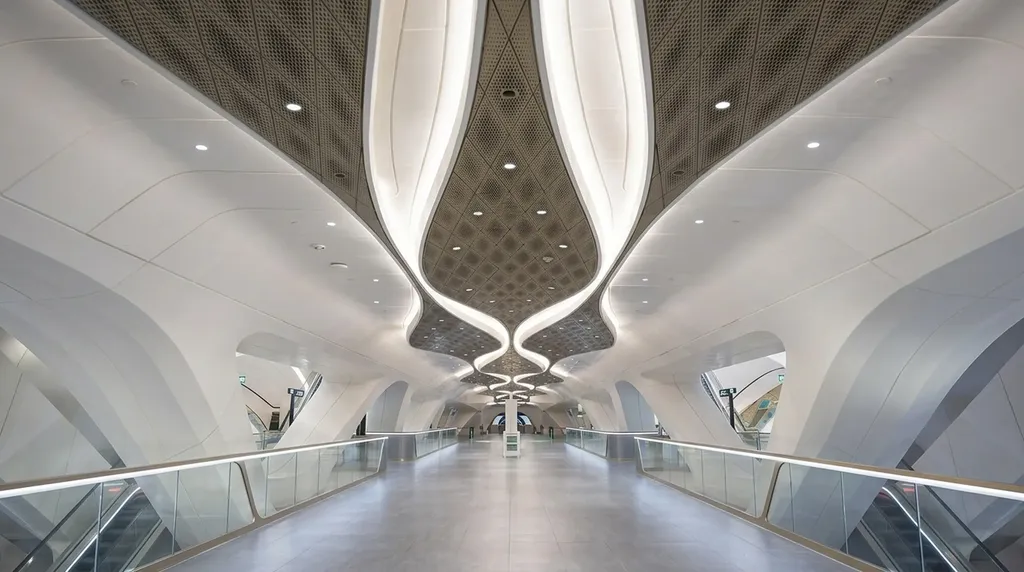
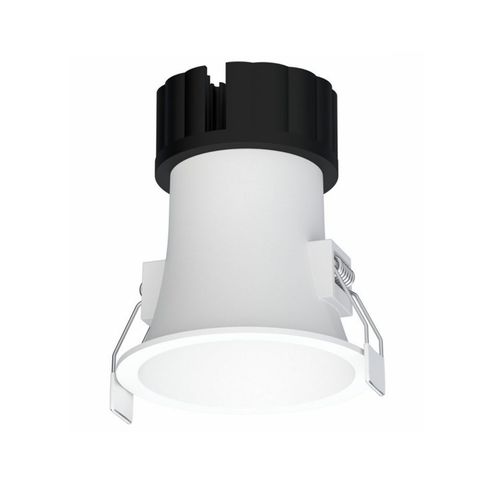
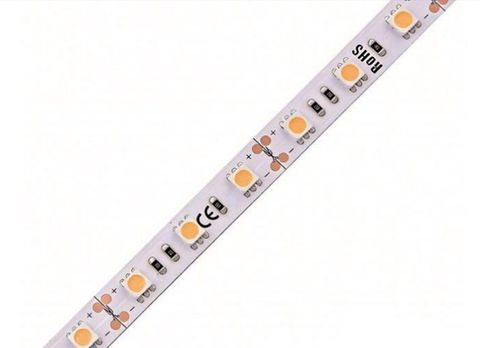
The sculpted forms overhead are lit from within, which means the source has to run the full length of a curving edge without a single joint or hot spot showing through the surface. RL-ST1330 is specified at 24V rather than 12V precisely because of that length — a concourse run is measured in tens of metres, and at 12V the far end of a run visibly fades. At 11W/m it also produces enough output to push light through a diffusing skin and still read as bright from the floor. RL-DL3333 handles the ticket line and the wayfinding zones where a genuine task level is needed. It is a deep-cup fitting — the LED sits 75 to 100mm back from the aperture behind a 20°, 40° or 60° optic — so a passenger looking up at the ceiling or down at a polished floor never catches the source directly, which is the difference between a station that feels calm and one that feels harsh. RL-ST1226 is the small-section answer for the glass balustrade: a 10mm board at 12V that fits inside a handrail extrusion where nothing larger would go, throwing light down the balustrade edge so the level change is unmistakable.
Platform
One Line, End to End
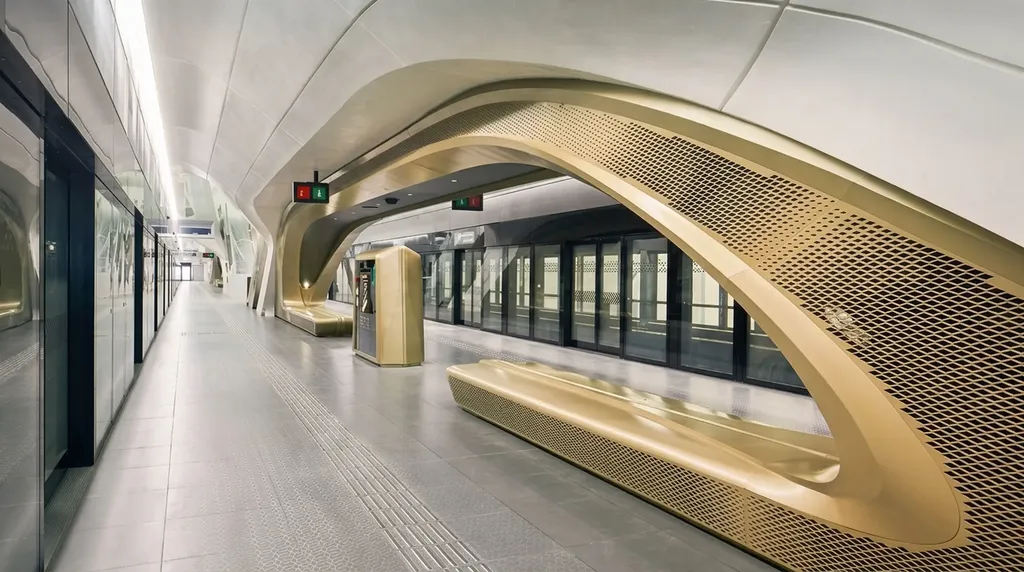
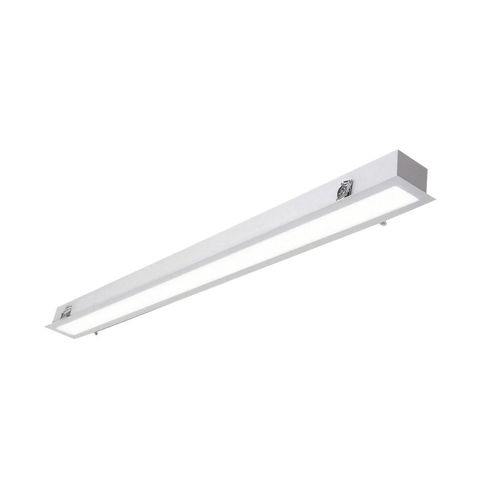
The platform reads as a single unbroken line of light running the length of the train, and holding that line is the whole technical problem. RL-LIN-REC is a recessed linear built for continuous run — modules butt together without a visible gap at the joint, and lengths are made to suit rather than forcing the ceiling to be divided into 1200mm bays. Over a platform the length of a six-car train, a joint every 1.2 metres would be the first thing a passenger notices. RL-ST1330 sits behind the bronze perforated arch, and this is where the perforation earns its keep: the tape is invisible, but the metal glows evenly, so the arch becomes the light fitting. RL-DL3333 fills the curved white soffits above the waiting zone, again on a deep cup — the platform edge is the one place in a station where a passenger must be able to judge a step precisely, and a glare source in their eye line at that moment is a safety issue rather than an aesthetic one. All three run on the same DALI backbone, so the platform can be brought down out of service hours and back up before the first train.
Project specification
Every product in this project
All products →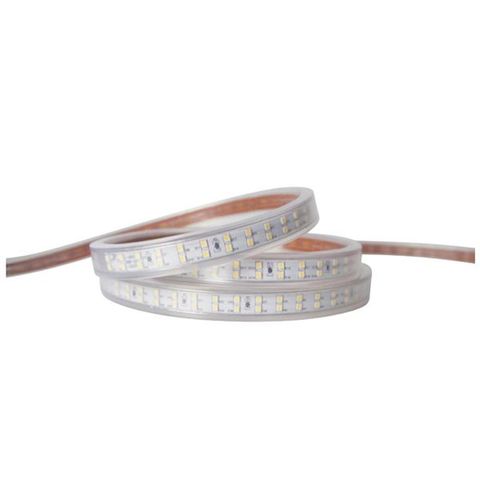
Lighting a space people move through at speed?
This project sits alongside Regents LED's wider portfolio of large-scale architectural, transport and hospitality lighting across the Gulf region, Europe and Asia.
Enquire about your project