
Why LED Lighting in Warehouses?
LED is better than fluorescent and metal halide in a warehouse by some distance: less energy, less maintenance, better light in large open spaces — and safer work for the people in them.
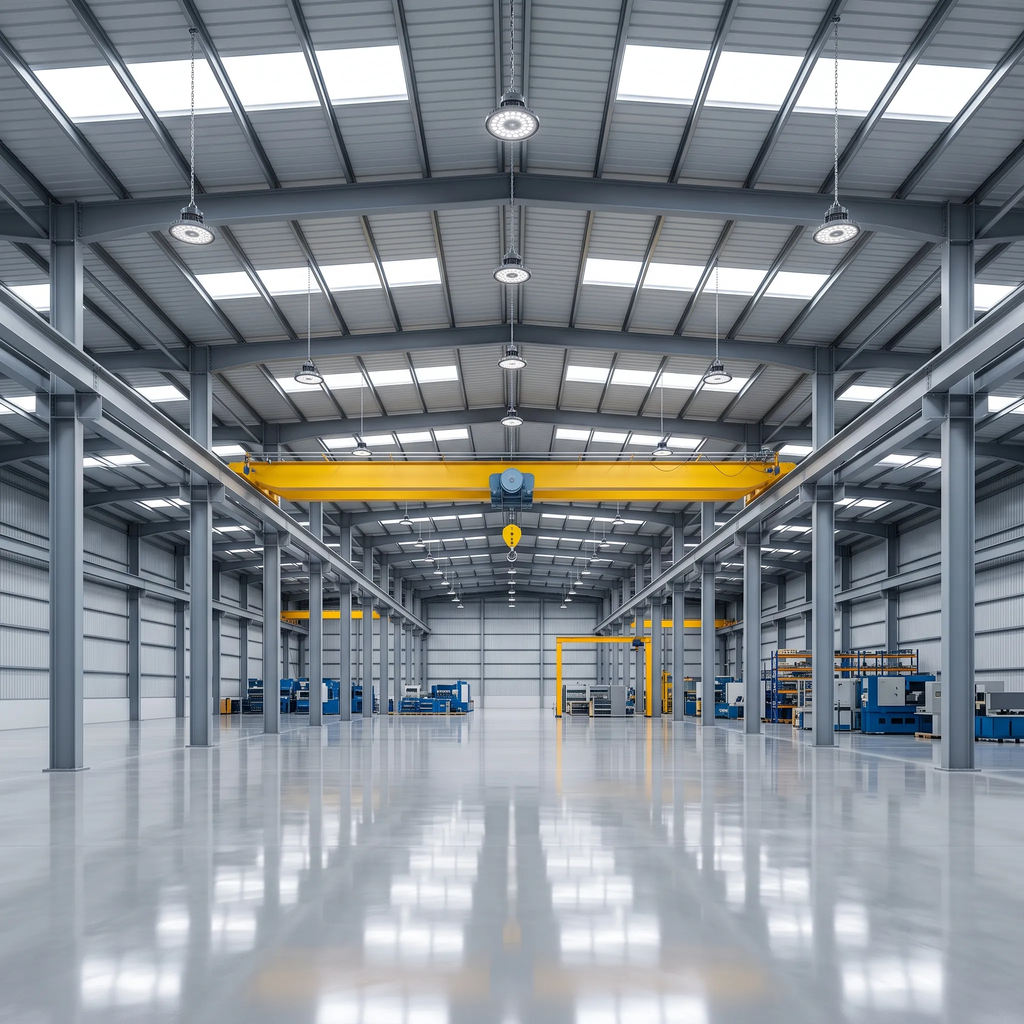
LED lighting is better than fluorescent lighting and metal halide lamps by far. LEDs use less energy and are easier to maintain, and they give off better-quality light, which makes them ideal for large, open spaces. LED warehouse lighting has a lot of benefits that most people don't see right away, and much of that comes down to the different ways LED and conventional lights are made.
Why upgrade your warehouse lighting to LED?
Both LED and fluorescent fittings use less energy than older sources, but most fluorescent tubes are made of glass, which makes them easy to break, and they contain mercury — a dangerous substance that can get into people's bodies if a tube breaks or cracks. LEDs are better for the environment because they aren't made of glass and don't contain mercury.
Safer work environments
Brighter places are safer places. Warehouse workers do a variety of tasks that usually involve moving around a lot and are often hard on their bodies. Without enough light, these everyday tasks can become dangerous. Warehouses are big spaces with long aisles and high shelves, which can leave a lot of darkened areas; bright LED lighting lights every part of the warehouse. The light from LED warehouse fittings is also much easier on the eyes. A fluorescent light will often flicker when switched on, which makes it harder to see and is very annoying. Regents LED lights come on immediately, without flickering or any other problem. Replacing older warehouse fixtures reduces accidents at work and improves safety.
Coverage and bright lighting
Jobs in a warehouse usually need very bright light and good coverage of the space to be done well. The old metal halide (MH) or high-pressure sodium (HPS) lamps still used in many warehouses typically draw 400 watts. An equivalent LED fitting uses between 170 and 210 watts to give the same amount of light at better quality. Some high-ceilinged warehouses use 1,000-watt metal halide lamps, where the LED equivalent uses less than 500 W.
Environmental and economic benefits
LEDs shine light exactly where it is needed on the floor, and use about half as much energy as metal halide or HPS lamps. A typical 400 W MH or HPS lamp might give off 35,000 lumens, but scatters them everywhere — and unlike LEDs, these lamps lose up to 50% of their output quickly over a short life.
Energy efficiency
Old metal halide and high-pressure sodium lamps are slow to start, lose their brightness quickly, burn out early and use a lot of electricity. LEDs, on the other hand, use far less power — around 80% to 90% less than traditional lighting. About 80% of the electricity is turned into light and only 20% is lost as heat. LED lights also need repairing less often because they last longer, which saves energy as well.
Adding LED lighting to a warehouse is the most cost-effective way to cut operating costs. LEDs have become popular because they give more and better light while using less energy, and because they last so long they are easier and cheaper to maintain.
Lower maintenance costs
The person in charge of a warehouse has to keep it profitable by keeping costs down, and almost all of a warehouse operator's costs — rent, wages, insurance, maintenance — are outside their control and go up every year. Lighting is one of the biggest users of energy in a warehouse, in some cases more than half of the electricity bill, and it is one of the easiest places to cut costs. Switching to LED warehouse lighting may be all that is needed.
Depending on the size of the warehouse, a lot of lights will need replacing at some point, which gets expensive. With an LED system you replace burned-out lamps far less often. When upgrading it is important that the new system is easy to install: you simply replace the old lamp with an LED one. Because the new technology lasts so much longer, maintenance costs fall further, and staff can spend their time looking after other warehouse equipment.
Longer lifespan
LED technology is reckoned to be three to four times more durable than conventional light sources. New LEDs have a lifespan of 50,000 to 100,000 hours, whereas the average metal halide lamp lasts between 6,000 and 15,000 hours. By using a light source that lasts longer, LED lighting substantially cuts maintenance costs. Lifespan is one of the most notable advantages of LED: an LED fitting can run for up to 11 years of continuous operation, and LEDs hold their brightness far better over their lifetime.