
The Art of Luxury Lighting: How Architectural Illumination Defines Five-Star Hospitality
In the world of luxury hospitality, excellence is measured by more than exceptional service, elegant interiors or prestigious locations. It is defined by the entire guest experience — the atmosphere, the emotions and the subtle details that make a stay truly memorable.
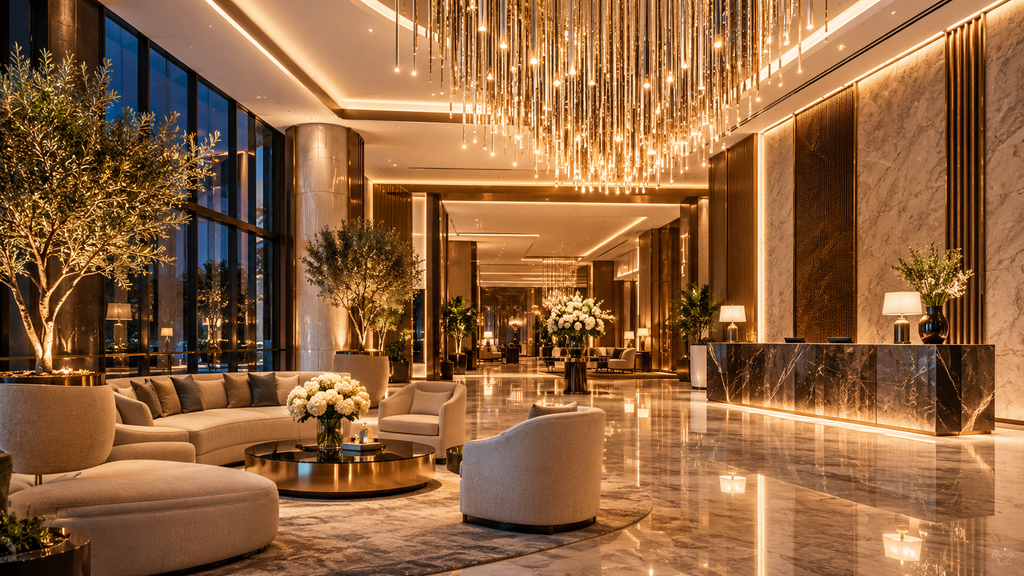
Among these details, lighting plays one of the most influential roles.
From the dramatic entrance of a five-star hotel to the intimate ambience of a presidential suite, architectural illumination shapes how guests perceive and experience a space. It highlights architectural beauty, enhances premium materials and creates an atmosphere that communicates sophistication without saying a word.
Today, luxury hotel lighting is no longer simply about visibility. It is an essential element of architectural identity and experiential design.
1. The First Impression: Creating an Iconic Hotel Arrival
The hotel entrance and reception area establish the tone for the entire guest journey. These spaces must communicate elegance, exclusivity and comfort from the very first moment.
Architectural lighting helps achieve this through carefully layered illumination, combining ambient lighting, accent lighting and decorative elements.
Concealed LED linear profiles create elegant ceiling details, while recessed downlights provide balanced illumination without disrupting the architectural composition. Carefully positioned spotlights highlight reception counters, artwork, textured walls and statement materials.
The objective is to create a welcoming atmosphere with visual depth, rather than relying on excessive brightness.
In luxury hospitality, the most sophisticated lighting schemes often make their greatest impact through subtlety.
2. The Art of Layered Lighting in Luxury Interiors
One of the defining characteristics of premium hotel interiors is the intelligent combination of different lighting layers.
Rather than illuminating an entire room uniformly, designers use multiple lighting sources to create depth, contrast and visual interest.
Three essential layers define an effective luxury lighting scheme:
Ambient Lighting
Provides the overall illumination of a space. Recessed LED downlights, concealed cove lighting and indirect ceiling illumination create a comfortable foundation.
Accent Lighting
Draws attention to architectural features, artwork, decorative elements and premium materials. Adjustable spotlights and precision LED projectors allow designers to control the visual hierarchy of an interior.
Decorative Lighting
Adds character and reinforces the design concept. Statement pendants, sculptural luminaires and bespoke lighting installations become integral elements of the interior architecture.
When these layers work together, they create an environment that feels balanced, refined and visually engaging.
3. Luxury Guest Rooms: Lighting Designed Around Comfort
A five-star guest room must serve multiple purposes. It is a place to relax, work, read and prepare for the day, all within an atmosphere of understated luxury.
Lighting should therefore adapt to different activities and moods.
Warm ambient lighting creates a relaxing environment, while dedicated reading lights provide functional illumination without disturbing the overall atmosphere. Concealed LED strips beneath furniture, within headboards or along architectural recesses add depth and create a sophisticated visual effect.
Lighting control is equally important.
With intelligent control systems such as DALI-2, hotel lighting can be integrated into flexible scenes that allow guests to adjust illumination according to their preferences.
A well-designed room might offer:
- Welcome Scene: Balanced, inviting illumination upon arrival.
- Relaxation Scene: Soft, warm lighting for evening comfort.
- Reading Scene: Focused illumination around the bedside.
- Night Scene: Subtle pathway lighting for safe movement.
- Morning Scene: Brighter illumination to support daily routines.
This combination of technology and design transforms lighting into a personalised hospitality experience.
4. Lighting as a Tool for Architectural Storytelling
Every luxury hotel has a distinct identity, expressed through its architecture, materials and interior design.
Lighting helps communicate that identity.
Natural stone, marble, wood, metal and textured finishes all respond differently to illumination. The correct beam angle, light intensity and colour temperature can reveal their natural qualities while creating a sense of depth and sophistication.
High-quality LED lighting with excellent Colour Rendering Index (CRI) is particularly important in these environments.
A high CRI helps colours and materials appear more naturally, preserving the intended appearance of carefully selected finishes, furnishings and decorative elements.
For designers, lighting is not simply an additional specification. It is a creative instrument that enhances the architectural language of a building.
5. The Luxury Spa and Wellness Experience
Wellness facilities are among the most atmospheric spaces in a premium hotel.
Spas, relaxation lounges, treatment rooms and indoor swimming pools require lighting that promotes tranquillity while maintaining the appropriate level of functionality and safety.
Indirect illumination, concealed linear LED systems and carefully controlled accent lighting can create a peaceful environment without overwhelming the senses.
In these spaces, warm colour temperatures and reduced glare are particularly valuable.
For wet areas and swimming pool environments, luminaires must also be selected according to the relevant ingress protection requirements, installation conditions and applicable safety standards.
The result is an environment where lighting supports the overall wellness concept, complementing materials, textures, water and architectural forms.
6. Restaurant and Lounge Lighting: Creating Memorable Atmospheres
Hotel restaurants, bars and lounges require a different lighting approach.
These spaces often transition between breakfast service, business meetings, afternoon relaxation and evening dining. Their lighting should accommodate these different experiences without compromising the identity of the interior.
Adjustable lighting scenes allow hospitality operators to transform the atmosphere throughout the day.
Precision spotlights can emphasise table settings and culinary presentation, while concealed LED strips and indirect illumination provide a comfortable ambient background.
In premium dining environments, lighting should create intimacy while ensuring that food, materials and surroundings are presented naturally.
The most successful restaurant lighting schemes balance visual drama with comfort.
7. Energy Efficiency Without Compromising Luxury
Modern luxury hospitality increasingly requires a balance between exceptional design and responsible energy consumption.
LED technology provides significant opportunities to reduce lighting energy use while maintaining high-quality illumination.
However, efficiency should not be considered in isolation. The overall performance of a lighting installation depends on luminaire efficacy, optical distribution, control strategies, operating hours and maintenance requirements.
Intelligent lighting controls, occupancy sensors, daylight harvesting and programmable scenes can further optimise energy consumption.
Long-lasting, high-quality LED luminaires also help reduce maintenance interventions, an important consideration for hotels operating around the clock.
For luxury developments, sustainability and visual excellence should work together rather than compete.
8. Choosing the Right Lighting for Luxury Hospitality Projects
The success of a hospitality lighting concept depends on more than selecting attractive luminaires.
It requires a comprehensive understanding of architectural intent, technical performance, installation requirements and the operational needs of the property.
Lighting professionals must consider:
- Colour temperature and colour consistency.
- CRI and visual comfort.
- Beam angles and optical precision.
- Glare control and lighting uniformity.
- Dimming compatibility and control integration.
- IP ratings and environmental requirements.
- Energy efficiency and long-term maintenance.
Considering these elements from the early design stages helps ensure that lighting solutions complement the building's architecture while meeting the project's technical and aesthetic objectives.
Conclusion: When Light Becomes Part of the Luxury Experience
Luxury hospitality is built around experiences that guests remember long after their stay.
Lighting is an essential part of creating those experiences. It defines the first impression, enhances architectural materials, creates intimate environments and allows hotel spaces to evolve throughout the day.
From grand hotel lobbies and elegant guest suites to sophisticated restaurants and wellness retreats, architectural illumination transforms functional spaces into extraordinary environments.
Ultimately, exceptional hospitality lighting goes beyond illumination. It is about bringing architecture to life, creating atmosphere and turning carefully designed spaces into unforgettable experiences.
Because in five-star hospitality, true luxury is often found in the details — and light makes those details unforgettable.