
LED Retrofit Projects: How to Upgrade Existing Buildings Without Compromising Lighting Quality
Upgrading existing lighting systems to LED technology is one of the most effective ways to improve energy efficiency, reduce maintenance costs and enhance lighting quality in commercial and industrial buildings.
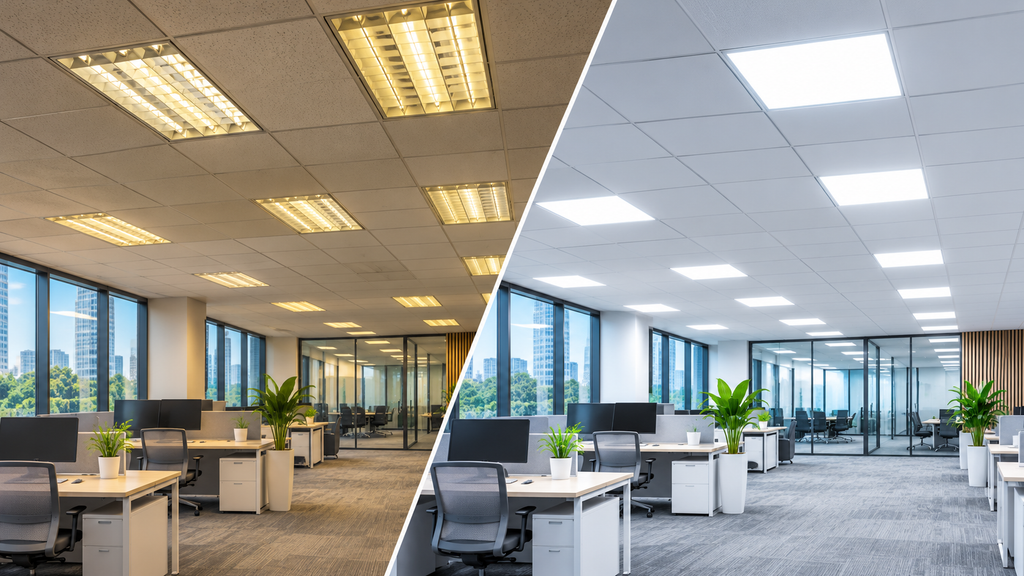
Many offices, hotels, warehouses, hospitals and retail facilities still operate with outdated lighting systems that consume excessive electricity and require frequent maintenance.
An LED retrofit provides an opportunity to modernise these installations without necessarily replacing the entire electrical infrastructure.
However, a successful retrofit involves more than simply changing existing lamps. It requires careful planning, technical assessment and the selection of suitable LED products to ensure long-term performance.
1. Why Upgrade to LED Lighting?
LED technology offers several advantages over traditional lighting systems.
- Lower energy consumption: LED luminaires can significantly reduce electricity usage compared with conventional lighting technologies.
- Reduced maintenance: Longer operating life means fewer replacements and lower maintenance costs.
- Improved lighting quality: Modern LED solutions provide better control over brightness, colour temperature and light distribution.
- Environmental benefits: Lower energy consumption and reduced replacement frequency help minimise environmental impact.
- Flexible controls: LED systems can integrate with dimming, occupancy sensors and intelligent lighting management.
These benefits make LED retrofitting an attractive investment for building owners and facility managers.
2. Assessing Existing Lighting Installations
Before starting an LED retrofit project, it is important to evaluate the existing lighting system.
A professional assessment should consider:
- Existing luminaire types and quantities.
- Current energy consumption.
- Required illumination levels.
- Ceiling heights and installation conditions.
- Existing electrical infrastructure.
- Lighting controls and emergency systems.
- Maintenance requirements and operational schedules.
This assessment helps determine whether a direct lamp replacement is suitable or whether a complete luminaire upgrade would deliver better results.
3. Choosing the Right LED Retrofit Solution
Not all retrofit projects require the same approach.
LED Lamp Replacement
In some installations, existing fixtures can accommodate compatible LED replacement lamps. This can be a cost-effective option where the existing luminaires remain in good condition.
Complete LED Luminaire Replacement
Replacing older fixtures with modern LED luminaires can provide better optical performance, improved efficiency and a more consistent lighting appearance.
Intelligent LED Lighting Systems
For larger commercial and industrial projects, integrating lighting controls can provide additional savings through occupancy detection, daylight harvesting and scheduled operation.
The right solution depends on the building's requirements, budget and long-term objectives.
4. Calculating Energy Savings and Return on Investment
One of the main reasons businesses invest in LED retrofits is the potential reduction in operating costs.
For example, replacing a traditional 150W lighting fixture with a 60W LED luminaire reduces connected lighting power by 60%, assuming equivalent operating conditions and suitable light output.
Actual savings depend on the number of fixtures, operating hours, electricity tariffs and the performance of the selected products.
A retrofit investment assessment should include:
- Initial equipment and installation costs.
- Expected annual electricity savings.
- Maintenance and replacement cost reductions.
- Operating hours and electricity tariffs.
- Estimated payback period.
A detailed financial assessment helps building owners understand the long-term value of the investment.
5. Maintaining Lighting Quality During the Upgrade
Energy efficiency should never come at the expense of visual comfort or safety.
A successful LED retrofit must maintain appropriate illumination levels and provide suitable light distribution for each application.
Important considerations include glare control, colour rendering, colour temperature and lighting uniformity.
Photometric calculations and lighting simulations can help verify that the proposed LED solution meets project requirements before installation.
6. Minimising Disruption During Installation
For operational buildings, lighting upgrades must be carefully planned to avoid unnecessary disruption.
A phased installation strategy can allow different areas to be upgraded while the facility continues operating.
Coordination with facility managers and electrical contractors is essential, particularly in hospitals, offices, warehouses and industrial environments.
Existing electrical compatibility, emergency lighting provisions and applicable safety regulations should also be checked before installation.
Conclusion
LED retrofitting is a practical way to modernise existing buildings, reduce energy consumption and improve lighting performance.
With the right planning and product selection, businesses can benefit from lower operating costs, reduced maintenance and improved lighting quality without necessarily undertaking major infrastructure changes.
At Regents LED, we believe every retrofit project should begin with a clear understanding of the building's requirements and operational objectives.
Whether upgrading an office, hotel, warehouse, retail space or industrial facility, selecting the right LED lighting solution is an investment in greater efficiency, reliability and long-term value.