
IP Ratings Explained for LED Lighting
Ask ten people what “IP65” means and most will say “waterproof.” That's close enough for casual conversation, but not precise enough for a specification that has to survive a site inspection, a warranty claim, or five years of coastal weather.
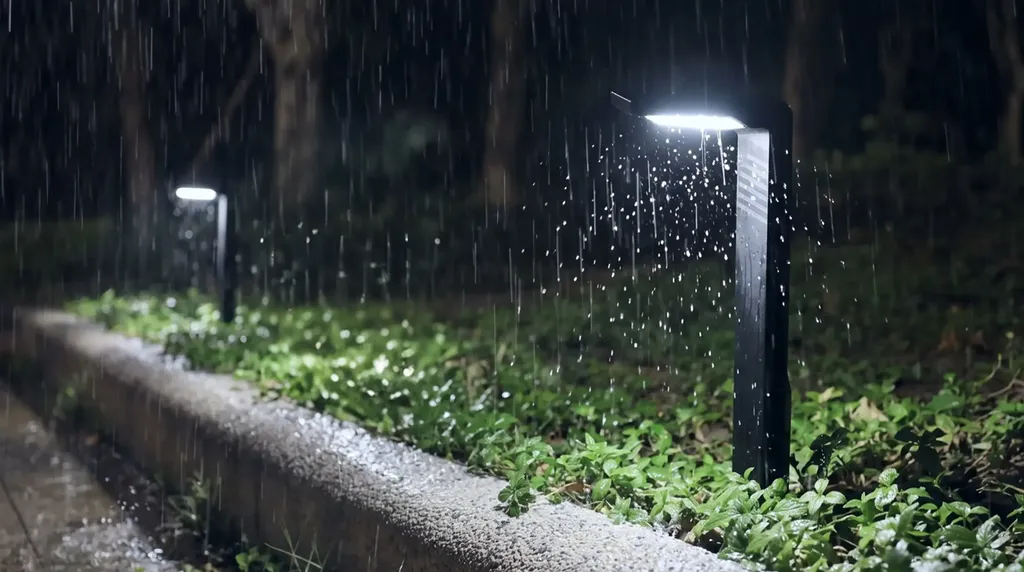
An IP rating is actually two separate test results reported as one number, and understanding what each digit covers — and, just as importantly, what it doesn't — is the difference between a fixture that quietly does its job for a decade and one that fails within its first winter.
What the two digits actually mean
The “IP” stands for Ingress Protection, and the rating comes from IEC 60529, the international standard both digits are tested against. The first digit, from 0 to 6, rates protection against solid objects and dust — everything from fingers and tools at the low end to a fully dust-tight enclosure at IP6X. The second digit, from 0 to 9K, rates protection against liquids, running from light spraying at IPX3 through to powerful high-pressure, high-temperature jets at IPX9K. A luminaire rated IP66 is dust-tight and can withstand powerful water jets from any direction; IP65 is dust-tight but only rated for jets at lower pressure. They sound similar. On a car wash bay or a jet-washed loading yard, the difference matters.
Why “IP65” isn't automatically the right answer
Specifiers sometimes default to the highest IP rating available “to be safe.” That instinct is understandable but often wasteful, and occasionally counterproductive. Higher ingress protection typically means a more sealed enclosure, which in turn means more attention has to be paid to thermal management, because the fixture can't rely on airflow to shed heat from the LEDs and driver. Overspecifying the rating on an internal, climate-controlled office corridor doesn't add meaningful value — it usually just adds cost and, in some designs, a slightly shorter component life if thermal design hasn't kept pace with the sealing. The right rating is the lowest one that genuinely fits the environment, not the highest one on the price list.

Matching the rating to the environment
- General internal, dry areas (offices, retail, corridors): IP20 is typically sufficient.
- Internal areas with occasional dust or damp (plant rooms, some warehousing): IP54 is a common baseline.
- External canopies, car parks, and covered walkways: IP65 is the standard starting point.
- Washdown areas — food processing, commercial kitchens, vehicle bays: IP66 or higher, and check the temperature of the jet too, since IPX9K specifically covers hot, high-pressure washdown.
- Coastal, marine, and permanently wet environments: IP66 or IP67, paired with a corrosion-resistant housing (marine-grade aluminium or polycarbonate, stainless fixings) — the IP rating protects against ingress, not corrosion, which is a separate specification.
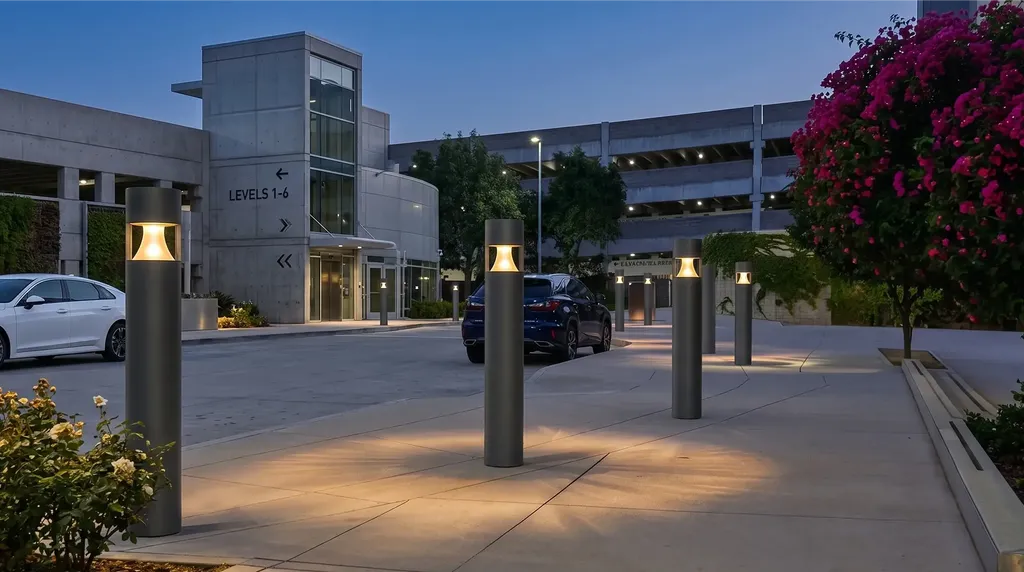
A rating you'll also want to check: IK, not IP
It's an easy mix-up: the IP rating says nothing about resistance to physical impact. That's covered by a separate scale, the IK rating (IK00 to IK10), tested against a defined impact energy. On a low-level bollard near a car park, a sports hall wall light, or anywhere near vehicle or ball-strike risk, the IK rating deserves as much attention as the IP rating — a fixture can be perfectly dust- and water-tight and still crack on the first impact if the housing wasn't specified with IK in mind.
None of this is exotic engineering — it's a five-minute check against a defined standard. But it's a check that's easy to skip under deadline pressure, and one of the more common reasons a lighting installation underperforms its expected life. Building it into the specification checklist, alongside IK rating and housing material, takes the guesswork out of matching a fixture to the environment it actually has to survive in.