
Fluorescent to LED: Retrofit Tubes vs New Luminaires
With fluorescent tubes disappearing from the supply chain, every building that still has them faces the same choice. Retrofit LED tubes are cheap and quick; they are also, in many cases, the wrong answer.
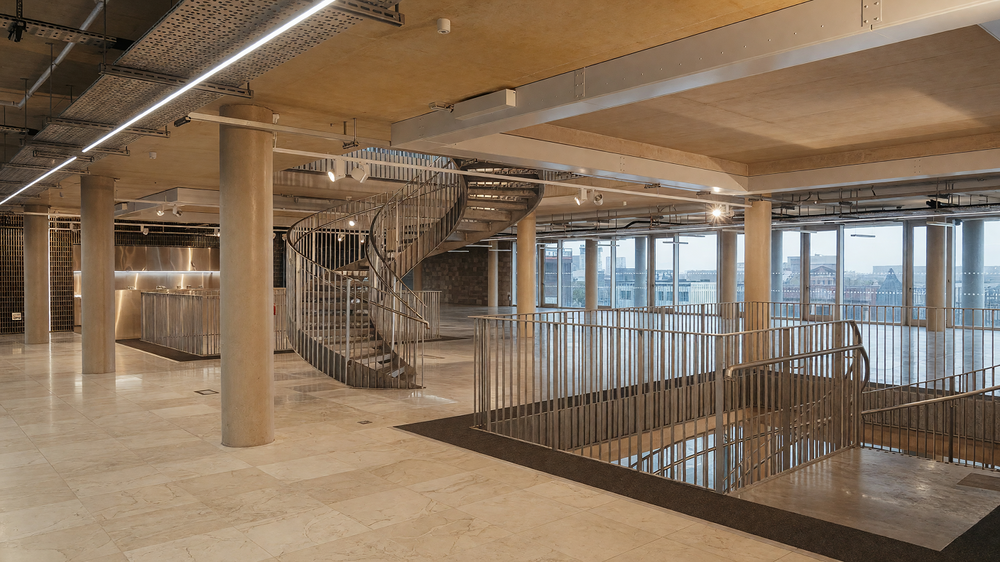
Fluorescent lighting is being phased out. The RoHS exemptions that allowed mercury-containing lamps to be placed on the market have ended: in the EU they expired in stages during 2023, and in Great Britain the equivalent exemptions for T5, T8 and most compact fluorescent lamps ended on 1 February 2024. Existing stock can still be sold and used, and nobody is obliged to remove working fittings, but replacement tubes are becoming harder and more expensive to find. Sooner or later every fluorescent installation will be converted, and there are two ways to do it.
Option one: retrofit LED tubes
An LED retrofit tube is shaped to fit an existing fluorescent luminaire, so the housing, the wiring and often the ceiling stay untouched. They come in three broad types. Plug-and-play tubes work with the existing ballast: quick, but the ballast keeps drawing power, keeps ageing, and limits which tubes will work — magnetic ballasts with starters are generally straightforward, high-frequency electronic ballasts are a compatibility lottery. Ballast-bypass tubes are wired directly to the mains after the ballast is removed, which recovers the ballast losses and removes a failure point but means the fitting has been modified. Hybrid tubes work either way. Whichever type, the tube's optics are designed to emit downward rather than all round, so the reflectors and louvres of the original fitting — designed for an omnidirectional tube — contribute less than they did, and the light distribution changes.
The modification point matters more than it is given credit for. When a luminaire is rewired to bypass its ballast, the original manufacturer's safety certification no longer describes what is on the ceiling. Responsibility for the fitting's safety passes to whoever modified it, the work should be done by a competent electrician, and the fitting should be labelled to warn future maintainers that it no longer takes a fluorescent tube. That is manageable on a small scale; across a 400-fitting office it is a compliance question worth asking properly.
Option two: new LED luminaires
A purpose-designed LED luminaire — a panel, a linear fitting, a batten — is engineered as a whole: the LEDs, the driver, the optics and the housing are matched, tested together and certified together. The efficacy is higher, often 130–160 luminaire lumens per watt against perhaps 100–130 for a good retrofit tube once the old housing's optical losses and any retained ballast are counted; the light distribution is designed for the space rather than inherited; low-glare optics for offices and aisle optics for warehouses are available; and controls — dimming, sensors, DALI, emergency — are integrated rather than bolted on. The fitting also comes with a warranty that covers the whole thing, and a lifetime rating that means something because the thermal design is known.
The cost is, obviously, higher: a new fitting plus the labour to remove the old one and make good. In many buildings the ceiling grid, the wiring and the existing positions can be reused, which narrows the gap considerably.
How to decide
- Remaining life of the building or tenancy. A retrofit tube is a reasonable bridge for a space that will be refitted within three or four years. It is a poor long-term solution for one that will not.
- Condition of the existing fittings. Yellowed diffusers, tired reflectors and brittle lampholders do not improve because the tube is new. If the housings are twenty years old, the tube is the cheapest part of the problem.
- Ambitions for controls. If the plan includes occupancy sensing, daylight dimming or Part L compliance, retrofit tubes make that harder; a new luminaire makes it a tick-box.
- Glare and light quality. In offices, a bare retrofit tube behind an old prismatic diffuser rarely meets modern UGR expectations. New luminaires with the right optics do.
- Energy. Both options save substantially against fluorescent. New luminaires save 20–40% more again, which over a ten-year life often repays the difference in capital cost by itself.
- Compliance and warranty. New luminaires carry their own UKCA or CE marking and a single warranty. Modified fittings carry neither in the same clean way.
A retrofit tube changes the light source. A new luminaire changes the lighting. Both have their place, but they are not the same upgrade.
For heritage fittings, short tenancies, plant rooms and stores where nobody cares much about the quality of the light, retrofit tubes are a sensible, economical answer. For offices, warehouses, schools, healthcare and anywhere that people work under the light for hours, the calculation almost always favours new luminaires once energy, controls, maintenance and compliance are counted honestly. The phase-out is forcing the decision; the mistake would be to let it force the cheapest one.