
Beyond Architecture: The Power of Luxury Exterior Lighting in Iconic Buildings and Modern Villas
How sophisticated architectural illumination transforms facades, landscapes and outdoor spaces into extraordinary visual experiences.
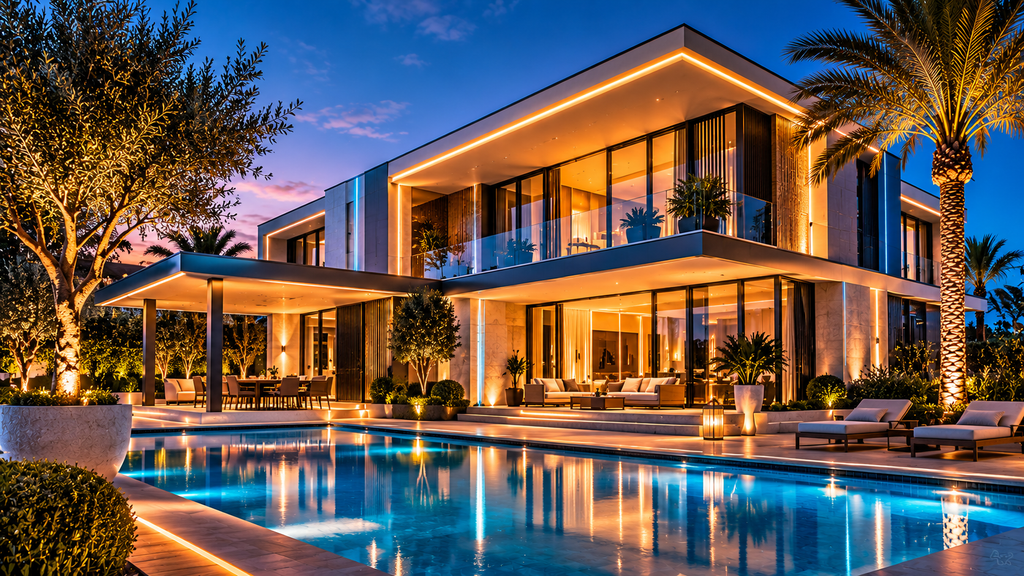
How sophisticated architectural illumination transforms facades, landscapes and outdoor spaces into extraordinary visual experiences.
Architecture does not end when the sun goes down. In fact, some of the most impressive buildings reveal their true character after dark, when carefully designed lighting brings their shapes, textures and architectural details to life.
In contemporary luxury architecture, exterior lighting has evolved from a functional necessity into an essential design element. It defines the identity of buildings, highlights their proportions and creates a visual connection between architecture and its surroundings.
From prestigious residential villas and contemporary mansions to luxury hotels and iconic commercial developments, architectural illumination transforms ordinary exteriors into distinctive landmarks.
The art of luxury exterior lighting lies in achieving the perfect balance between aesthetics, functionality, precision and energy efficiency.
1. The Art of Illuminating Architectural Facades
A building's facade is its visual signature. Its materials, proportions, textures and structural details communicate its architectural identity.
Exterior lighting allows designers to reveal these characteristics after sunset, creating depth and visual interest without overwhelming the original design.
Different lighting techniques can produce dramatically different results.
- Wall Washing: Creates a smooth, uniform layer of illumination across large architectural surfaces.
- Wall Grazing: Highlights the texture of natural stone, concrete, brick and other textured materials.
- Linear Lighting: Emphasises architectural edges, rooflines, recesses and geometric forms.
- Accent Lighting: Draws attention to columns, entrances, architectural features and decorative elements.
The choice of technique depends on the building's design, materials and desired visual effect.
In luxury architecture, precision is essential. Lighting should enhance the building rather than compete with it.
2. Modern Villas: Creating a Distinctive Nighttime Identity
Luxury villas are increasingly designed as complete architectural experiences, where indoor and outdoor environments flow seamlessly into one another.
Exterior lighting plays an important role in establishing this connection.
A carefully illuminated villa can reveal its architectural character while creating a welcoming atmosphere for residents and visitors.
Concealed LED linear profiles can emphasise rooflines and architectural recesses, while recessed outdoor luminaires provide discreet illumination along entrances, pathways and terraces.
Adjustable spotlights can highlight selected facade elements, landscape features and premium exterior materials.
The objective is not to illuminate every surface equally, but to create a carefully composed visual experience.
A successful residential lighting scheme gives the property a distinctive identity while preserving the elegance of its architecture.
3. Landscape Lighting: Extending Luxury Beyond the Building
In high-end residential and hospitality developments, landscape design is an extension of the architecture.
Gardens, pathways, trees, water features and outdoor seating areas all contribute to the overall character of a property.
Lighting allows these elements to remain visually engaging after sunset.
Carefully positioned landscape spotlights can highlight the natural shape of trees and plants, while discreet pathway lights improve visibility and orientation.
In contemporary gardens, integrated LED lighting can also be incorporated into steps, retaining walls, garden structures and outdoor furniture.
Swimming pools and water features offer additional opportunities for creative illumination, with reflections and subtle lighting effects adding depth to the surrounding environment.
The most successful landscape lighting schemes maintain a sense of balance. They create atmosphere without excessive brightness or unnecessary visual clutter.
4. The Importance of Choosing the Right Colour Temperature
Colour temperature has a significant influence on the appearance of exterior architecture.
The same building can look completely different depending on the colour of the light used to illuminate it.
Warm white lighting can create an inviting and elegant atmosphere, particularly when used with natural stone, timber and traditional architectural materials.
Neutral white lighting can provide a contemporary appearance and is often suitable for modern facades, commercial developments and architectural structures with clean geometric lines.
The selection should always consider the building's materials, surrounding environment and intended visual identity.
Consistency is equally important. Using compatible colour temperatures across different exterior lighting elements helps create a unified architectural composition.
For premium projects, the quality of light matters as much as its colour.
5. Precision and Beam Control: Lighting Without Visual Pollution
One of the most important aspects of professional exterior lighting design is controlling where the light goes.
Poorly positioned luminaires can create glare, unwanted shadows, uneven brightness and unnecessary light spill.
In luxury developments, these problems can compromise both the architectural appearance and the comfort of surrounding spaces.
Precision optics and carefully selected beam angles allow designers to direct illumination towards specific architectural elements.
Narrow beams can highlight columns, sculptures and vertical features, while wider distributions are more appropriate for larger surfaces and general exterior illumination.
Shielded luminaires and thoughtful positioning can also reduce glare and minimise unwanted light entering neighbouring properties or the night sky.
Effective exterior lighting is not about using more light. It is about using light intelligently.
6. Lighting Luxury Outdoor Living Spaces
Outdoor living has become an important feature of contemporary luxury properties.
Private terraces, rooftop lounges, outdoor kitchens and landscaped entertainment areas are increasingly designed with the same attention to detail as interior spaces.
Lighting helps make these environments functional and visually appealing throughout the evening.
Integrated LED strips beneath seating, within steps and along architectural edges can provide subtle illumination without distracting from the design.
Recessed downlights and adjustable spotlights can create comfortable illumination around dining and seating areas.
For hospitality developments, programmable lighting scenes can also help transform outdoor environments according to different activities and occasions.
The result is a seamless relationship between architecture, landscape and lifestyle.
7. Smart Exterior Lighting and Architectural Control
Modern exterior lighting systems offer far greater flexibility than traditional installations.
Intelligent lighting controls allow different exterior zones to operate according to specific schedules, occupancy conditions and daylight levels.
Systems such as DALI-2 can provide sophisticated control and dimming capabilities where compatible with the selected equipment and system architecture.
For large residential and commercial developments, this flexibility can improve operational efficiency while allowing lighting designers to create different nighttime atmospheres.
A building might feature brighter illumination around entrances and pathways, softer lighting across landscape areas and carefully controlled accent lighting on its facade.
Smart control makes it possible to manage these elements as part of one coordinated architectural lighting concept.
8. Sustainability and Long-Term Performance
Luxury exterior lighting must deliver lasting performance in demanding environmental conditions.
Outdoor luminaires are exposed to temperature variations, humidity, dust, rain and, in coastal locations, potentially corrosive environmental conditions.
Selecting suitable equipment is therefore essential.
Important considerations include:
- Appropriate IP protection ratings for the installation environment.
- Corrosion-resistant materials and finishes.
- High-quality LED modules and drivers.
- Effective thermal management.
- Suitable surge protection.
- Reliable dimming and control compatibility.
- Long-term maintenance accessibility.
Energy efficiency is another important consideration.
Modern LED technology can significantly reduce lighting energy consumption compared with traditional lighting technologies, while intelligent controls and appropriate optical distribution help avoid unnecessary energy use.
Sustainable exterior lighting is ultimately about combining efficient technology, durability and thoughtful design.
9. Creating Iconic Buildings Through Light
Some architectural projects become recognisable landmarks because of the way they interact with their surroundings after dark.
Hotels, cultural buildings, commercial towers and prestigious residential developments can use architectural lighting to establish a distinctive nighttime identity.
Rather than applying a generic lighting approach, successful projects begin with an understanding of the building's architectural concept.
The lighting design should respond to its proportions, materials, structural rhythm and surrounding environment.
A restrained approach can be just as powerful as a dramatic one. Subtle lines of light, carefully illuminated surfaces and selective accents can communicate sophistication more effectively than excessive brightness.
Ultimately, the best architectural lighting designs respect the original vision of the architect while adding a new dimension to the building.
Conclusion: Architecture in a New Light
Luxury exterior lighting is much more than an aesthetic addition. It is an essential part of how modern architecture is experienced after sunset.
From elegant villa facades and sophisticated landscapes to iconic commercial buildings and premium hospitality developments, carefully designed illumination reveals architectural beauty, enhances outdoor environments and creates memorable visual experiences.
The combination of advanced LED technology, precision optics, intelligent controls and thoughtful lighting design allows architects and designers to achieve exceptional results without compromising efficiency or functionality.
When lighting is integrated into architecture from the earliest design stages, it becomes part of the building itself — shaping its identity, enhancing its surroundings and transforming the nighttime experience.
Because exceptional architecture deserves to be admired at every hour of the day.