
Benefits of LED Lighting for the Industrial Field
LEDs cost more up front than other industrial light sources, but last far longer, need almost no upkeep and run in any climate — the return on investment, maintenance, mercury and glare questions answered.
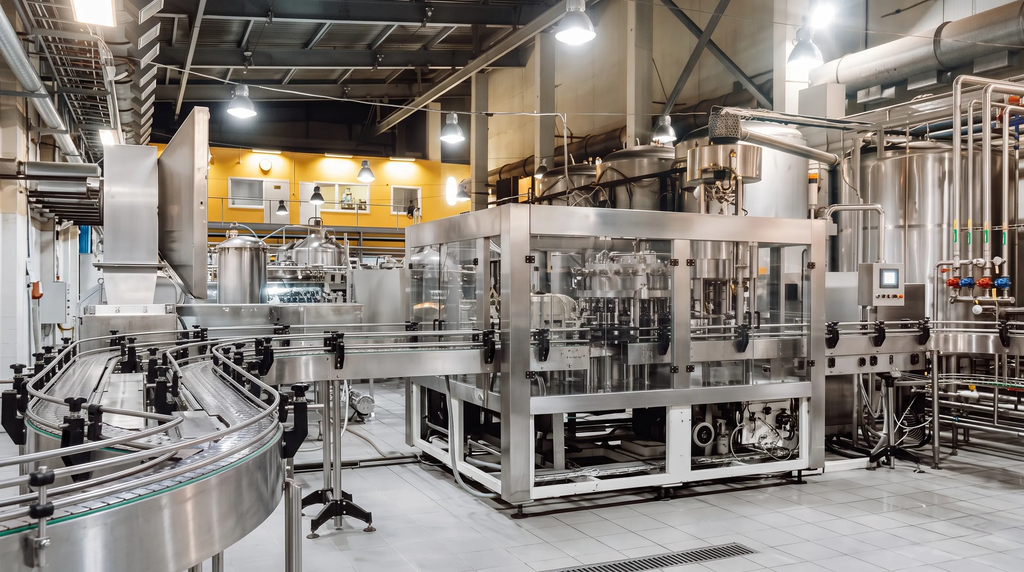
LED lights are gaining popularity in commercial and industrial settings because of their distinct benefits. LEDs cost more initially than other light sources, but they last far longer without failing and need almost no upkeep. Their longevity is the greatest benefit — some models have a lifetime of up to 100,000 hours. LEDs are more energy-efficient than traditional light sources, and they work effectively in all climates if the fixtures are built correctly.
Return on investment for industrial LED lighting
People seem to believe some false things about how LED lighting can be used in industrial settings. Industry should know that LED lighting can replace fluorescent, HID and any other type of industrial lighting at a lower overall cost. LED lights are a little more expensive to buy than fluorescent fittings, but that is a one-time cost, and because they use less energy, businesses that use LED lighting pay less for their electricity.
In the past, the energy cost of lighting didn't play much part in buying decisions. A decade of quickly rising energy prices has made energy use the main cost driver for industrial lighting.
Organisations in business and industry shouldn't give up long-term benefits for shorter initial payback periods, which are usually measured in months. Instead they should look for benefits that last for years. From a purely financial point of view, LED lights make sense because they last longer and cost less to maintain.
LED lights don't require maintenance
It is a myth that LED lighting adds to maintenance. People assume that LEDs have magnetic ballasts that need fixing or replacing every so often, but LED lights use electronic drivers that are designed to work in rough environments and rarely need changing. In traditional industrial lighting — HID, HIF, HPS and metal halide — a magnetic ballast wears out quickly and needs to be repaired or replaced.
Magnetic ballasts are very expensive to maintain in large commercial and industrial buildings with many fluorescent or HID lights. LEDs, on the other hand, are semiconductors with electronic drivers. The driver manages the flow of power and makes the light use less energy, and because the driver is electronic, manufacturers can add controls — sensing, dimming and instant on/off — to make fittings as useful and energy-efficient as possible.
Well-designed LED drivers don't fail
One of the best things about LED lighting for industrial use is that well-made LED drivers don't fail while the LED is still working, so it is unlikely you will need to replace a driver or any other part. Switching an LED fitting on and off often doesn't shorten its useful life either — unlike traditional fluorescent or HID fittings, whose lives are greatly shortened by frequent switching. In fact, switching an LED fitting off when it isn't needed makes it last longer, because it slows the rate at which the hours of use add up.
LED lights don't contain mercury
Most people assume that LED lights, like fluorescent lights, contain mercury. They do not, and are not hazardous. They work well where temperatures are high — in fact, well-made LEDs work well in any setting. A lighting system that performs at any temperature, hot, cold or in between, needs to be well designed and good at getting rid of heat. LED lights also work very well in very cold places.
LED lighting can manage glare
The last benefit of LED lights for industrial use is that they can control glare. A lighting system that shines too brightly into people's eyes is not good for many industrial facilities. Today's LED fittings are designed so that they don't, and direct brightness and glare are kept to a minimum by well-designed optics.