

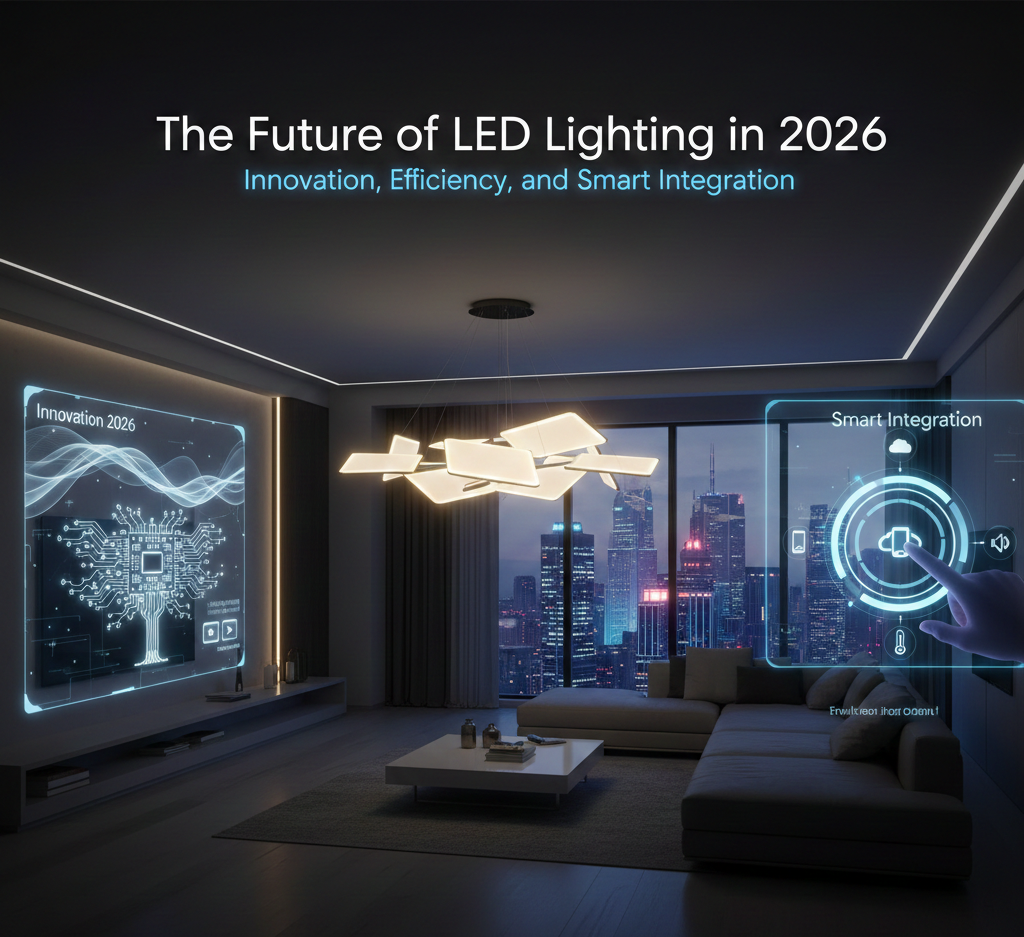
As technology advances and the demand for sustainable, energy-efficient solutions grows, LED lighting (Light Emitting Diode) has become the global standard for residential, commercial, and industrial applications.
By 2026, the LED industry is undergoing significant transformations, including smart integration, enhanced energy efficiency, and eco-friendly innovations.
LED lighting is no longer just a source of illumination—it has become a strategic investment that reduces operating costs, improves visual comfort, and enhances environmental performance.
This article explores the major trends, technological developments, and practical benefits of LED lighting in 2026, helping businesses and homeowners make informed decisions.
1- Higher Efficiency : Smarter and More Cost-Effective LED Lighting
Energy efficiency remains the primary factor for choosing lighting solutions in 2026. Modern LED lights provide:
- Up to 80% lower energy consumption compared to traditional incandescent or fluorescent bulbs.
- Extended lifespans of up to 100,000 hours, reducing maintenance and replacement costs.
- Dynamic lighting control that adjusts brightness automatically based on occupancy or natural light levels, maximizing efficiency without compromising comfort.
These features give businesses and commercial buildings a competitive advantage, especially as energy costs rise and sustainability regulations tighten globally.
2- Smart LED Lighting and Building Automation
Integrating LED lighting with smart building systems (BMS) is one of the most significant trends in 2026:
- Remote control through mobile apps or voice commands.
- Automated on/off schedules based on occupancy and activity.
- Integration with motion sensors and ambient light sensors for optimal energy use.
- Compatibility with renewable energy systems like solar panels and battery storage to increase sustainability.
Smart LED lighting is no longer optional—it’s a necessity for modern offices, hotels, hospitals, and commercial complexes.
3- Sustainability and Environmental Responsibility
By 2026, LED adoption is driven not only by performance but also by environmental responsibility:
- Reduced carbon emissions due to lower energy consumption.
- Use of eco-friendly manufacturing materials.
- Minimization of waste due to the long lifespan of LED lights.
Recent studies show that full adoption of LED lighting can reduce energy consumption in commercial buildings by over 50%, supporting global sustainability goals and green building certifications.
4- Enhanced Light Quality and Visual Experience
LED technology in 2026 emphasizes visual comfort and high-quality illumination:
- High Color Rendering Index (CRI >90) ensures accurate color representation, ideal for retail, galleries, and office environments.
- Uniform light distribution reduces glare and shadows.
- Multiple color temperatures (3000K–6500K) allow customization for different applications, from offices to industrial facilities.
These improvements make LED lighting the ideal choice for spaces requiring precise color accuracy and superior visual comfort.
5- LED Market Trends in 2026
The global LED market is projected to grow at a compound annual growth rate (CAGR) exceeding 10% over the next few years, driven by :
- The rise of smart buildings and smart cities.
- Increasing awareness of sustainability and demand for energy-efficient solutions.
- Continuous innovation in LED design for industrial, commercial, and residential applications.
- Government incentives and international clean energy initiatives.
6- Practical Applications of Modern LED Solutions
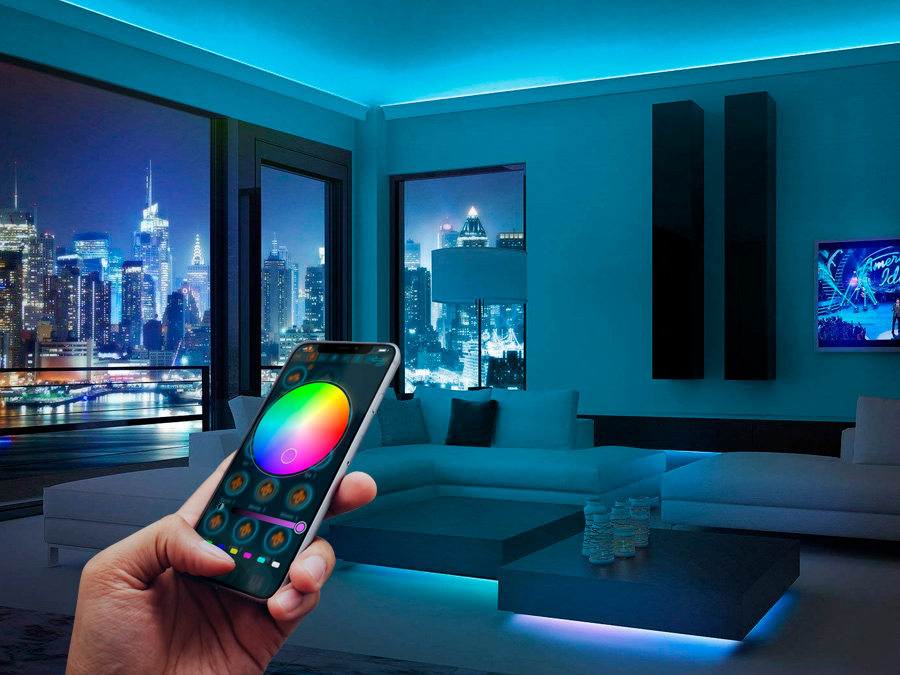
Residential Lighting
- Multi-functional solutions: general lighting, accent lighting, and task lighting.
- Smart home integration via apps or voice control.
- Enhanced visual comfort, reducing eye strain and improving quality of life.
Commercial Lighting
- Highlighting products in retail stores and shopping centers.
- Increasing employee productivity with well-distributed, high-quality lighting.
- Centralized control to reduce energy consumption and operational costs.
Industrial Lighting
- Durable solutions designed for harsh environments.
- Long-lasting LED lights that minimize maintenance and replacement costs.
- Improved safety and visibility for workers in factories, warehouses, and production
facilities.
7- Why Choose Regents LED in 2026?
At Regents LED, we deliver comprehensive LED solutions based on the latest technological innovations :
- Modern, customizable designs suitable for any space.
- High energy efficiency to significantly reduce operational costs.
- Smart integration with building systems for enhanced comfort and performance.
- Sustainable practices using environmentally friendly materials.
We don’t just provide lighting—we provide strategic solutions that improve performance, aesthetics, and sustainability for every project.
By 2026, LED lighting is set to define the future of illumination. From energy efficiency to smart integration and environmental sustainability, LED technology offers a complete solution for residential, commercial, and industrial applications.